How to Clean Silver Coins Without Damaging Their Value
Silver coins are valued for more than their precious metal content. Their historical significance, original condition, craftsmanship, and collectible appeal can all contribute to their overall worth. However, over time, silver coins may develop tarnish, fingerprints, surface spots, or discolouration due to exposure to air, moisture, and improper handling.
If you own a silver coin collection, you may wonder how to clean silver coins without damaging their appearance or reducing their value. The answer is not always to polish them. In fact, cleaning certain silver coins can permanently affect their original surfaces and collector appeal.
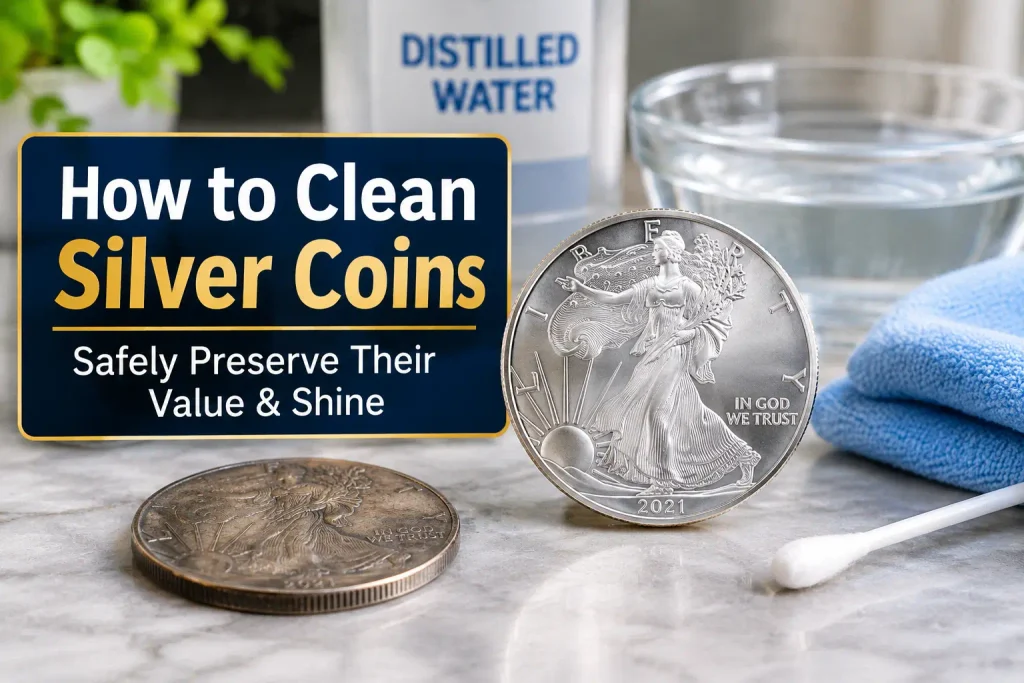
In this guide, we will explain why silver coins tarnish, when cleaning should be avoided, safe handling techniques, and the best ways to protect your collection for the long term.
Why Do Silver Coins Become Tarnished?
Silver is a naturally reactive metal. When exposed to sulphur-containing compounds in the surrounding environment, it can develop a surface layer of silver sulphide, commonly known as tarnish.
Several factors can contribute to changes in a silver coin’s appearance:
- Air exposure: Sulphur compounds in the atmosphere can gradually cause silver to tarnish.
- Moisture and humidity: Poor storage conditions can accelerate surface deterioration.
- Fingerprints: Natural oils, salts, and moisture from hands can leave marks.
- Improper storage: Contact with unsuitable packaging materials can damage silver surfaces.
- Chemical exposure: Household cleaners and polishing products can permanently alter a coin’s original finish.
It is important to understand that tarnish is not necessarily a sign of poor quality. Natural toning can be part of a coin’s history and may even be appreciated by collectors.
Should You Clean Silver Coins?
Before learning how to clean silver coins, consider whether cleaning is necessary at all.
For rare, antique, proof, graded, and potentially collectible coins, professional guidance is generally the safest approach. Cleaning or polishing can create fine scratches, remove original surface characteristics, and negatively affect collector value.
Collectors often prefer coins with their original surfaces rather than examples that have been artificially polished to look new.
For this reason, avoid cleaning a coin simply because it has become darker or developed natural toning.
If you are unsure about a coin’s rarity or potential value, have it evaluated before attempting any cleaning.
How to Clean Silver Coins: Safe Practices to Follow
If a silver coin has ordinary surface dirt and you have established that it has no significant collectible value, careful handling is essential. The following practices can help minimise unnecessary damage.
1. Identify the Coin Before Cleaning
First, determine the coin’s date, mint mark, silver purity, and potential collectible significance.
Some older silver coins may be worth considerably more than their metal content. Understanding what you own helps you avoid damaging something valuable.
If the coin is rare, graded, or potentially valuable, do not attempt home cleaning.
2. Prepare a Clean and Safe Workspace
Choose a clean, well-lit workspace with a soft towel or protective surface underneath the coin.
Wash and dry your hands before handling coins. Clean cotton gloves can also help prevent fingerprints and direct contact with the metal.
Always hold a silver coin gently by its edges rather than touching its front or back surfaces.
3. Use Distilled Water for Ordinary Surface Dirt
For an ordinary, non-collectible silver coin that genuinely needs cleaning, lukewarm distilled water can help loosen surface dirt.
If necessary, a small amount of mild liquid soap may be used. Avoid powdered detergents, abrasive products, and strong cleaning solutions.
Never scrub the coin or use a brush to remove stubborn marks. Even gentle rubbing can leave scratches.
4. Rinse Without Scrubbing
If mild soap has been used, rinse the coin carefully with clean distilled water to remove any remaining residue.
Avoid unnecessary handling during this process. Do not use abrasive cloths, brushes, or paper products to wipe the surface.
5. Allow the Coin to Dry Naturally
Place the coin on a clean, lint-free surface and allow it to air-dry.
Avoid rubbing or polishing it to restore shine. The objective should be to prevent further damage, not to make an older coin look brand new.
Important: These practices are not a recommendation to clean valuable collectible coins. Professional conservation is preferable whenever a coin’s condition or value may be affected.
What Should You Never Use to Clean Silver Coins?
Some popular household cleaning methods can cause permanent damage to silver coins.
Avoid the following:
- Baking soda: Its abrasive action can leave fine scratches.
- Toothpaste: Contains polishing and abrasive ingredients that may damage the original finish.
- Vinegar and lemon juice: Their acidity can affect the coin’s surface.
- Silver polish: Designed for silverware rather than preserving collectible coin surfaces.
- Metal cleaning brushes: Can create visible scratches and remove surface details.
- Chemical dipping solutions: May strip natural toning and alter the coin’s appearance.
A brighter coin is not necessarily a more valuable coin. Preserving originality is often more important than achieving a polished appearance.
How to Store Silver Coins and Prevent Tarnishing
Proper storage is one of the most effective ways to protect your silver coin collection.
Consider these practical recommendations:
- Use protective coin capsules: Individual capsules help reduce direct contact, dust, and handling damage.
- Choose PVC-free materials: Use coin holders and storage products made from suitable, non-reactive materials.
- Keep coins in a cool, dry environment: Avoid excessive humidity and sudden temperature changes.
- Limit unnecessary handling: Every additional contact creates another opportunity for fingerprints and surface damage.
- Keep original packaging: If a coin comes in a protective capsule or original presentation case, avoid removing it unnecessarily.
- Maintain proper documentation: Keep certificates of authenticity, purchase records, and grading information where applicable.
These simple precautions can help preserve the appearance and condition of Silver Coins over time.
What to Consider When Buying Silver Coins
If you are interested in expanding your collection, understanding coin condition and authenticity is just as important as knowing how to maintain it.
Before exploring silver coins for sale, consider the following factors:
- Silver purity: Check the stated silver content and fineness.
- Weight and specifications: Verify the coin’s recognised weight and dimensions.
- Authenticity: Purchase from reputable dealers and check available authentication information.
- Condition and grading: Understand the difference between bullion condition and numismatic grade.
- Premium over spot price: Compare the total purchase price with the prevailing silver spot price.
- Storage and protection: Consider how you will safely store your coins after purchase.
Whether you are a first-time buyer or an experienced collector, taking time to research before you buy silver coins can help you make more informed purchasing decisions.
Rather than relying on household cleaning tricks or aggressive polishing, focus on careful handling, suitable storage, and professional conservation when necessary.
At Gibraltar Group, we believe informed decisions and responsible precious metals ownership are important parts of building and protecting a physical silver collection. Whether you are preserving coins you already own or exploring opportunities to expand your holdings, understanding proper silver coin care is a valuable step towards long-term ownership.
Disclaimer: This article is for educational purposes only and should not be considered financial or investment advice. Coin values depend on factors including silver content, condition, rarity, authenticity, and market demand.
Frequently Asked Questions (FAQs)
1. How do you clean silver coins without damaging them?
The safest approach is to avoid unnecessary cleaning, especially for rare, antique, or collectible silver coins. If a non-collectible coin has ordinary surface dirt, carefully rinsing it with lukewarm distilled water may help. Avoid scrubbing, polishing, abrasive materials, and harsh chemicals, as these can scratch the surface and affect its original condition.
2. Should you clean tarnished silver coins?
No, tarnished silver coins should not automatically be cleaned. Tarnish is a natural reaction between silver and sulphur compounds in the environment. Natural toning can contribute to a coin’s character and may be appreciated by collectors. For valuable or collectible coins, professional conservation advice is recommended before attempting any cleaning.
3. Does cleaning silver coins reduce their value?
Yes, cleaning silver coins can reduce their collectible value, particularly when it removes original surface characteristics or leaves visible scratches. Collectors generally prefer coins with their original, undisturbed surfaces. Before cleaning an old, rare, or potentially valuable coin, consider having it professionally evaluated.
4. Can you clean silver coins with baking soda?
It is generally not recommended to clean silver coins with baking soda. Although commonly used for household silver cleaning, baking soda can be abrasive and may leave fine scratches on a coin’s surface. It can also remove natural toning. For collectible silver coins, avoid home polishing methods and seek professional advice.
5. How should silver coins be stored?
Silver coins should be stored individually in suitable PVC-free coin capsules or protective holders. Keep them in a cool, dry environment away from excessive humidity, direct sunlight, and chemical exposure. Handle coins by their edges and avoid unnecessary contact with their surfaces. Proper storage helps preserve their original condition and reduces the risk of tarnishing or physical damage.